Quick Summary
Choosing between commercial MR plywood and waterproof BWP plywood comes down to location, moisture exposure, and budget. While waterproof plywood excels in wet areas, commercial plywood remains an economical choice for dry bedrooms.
The Core Difference: Adhesive Resin
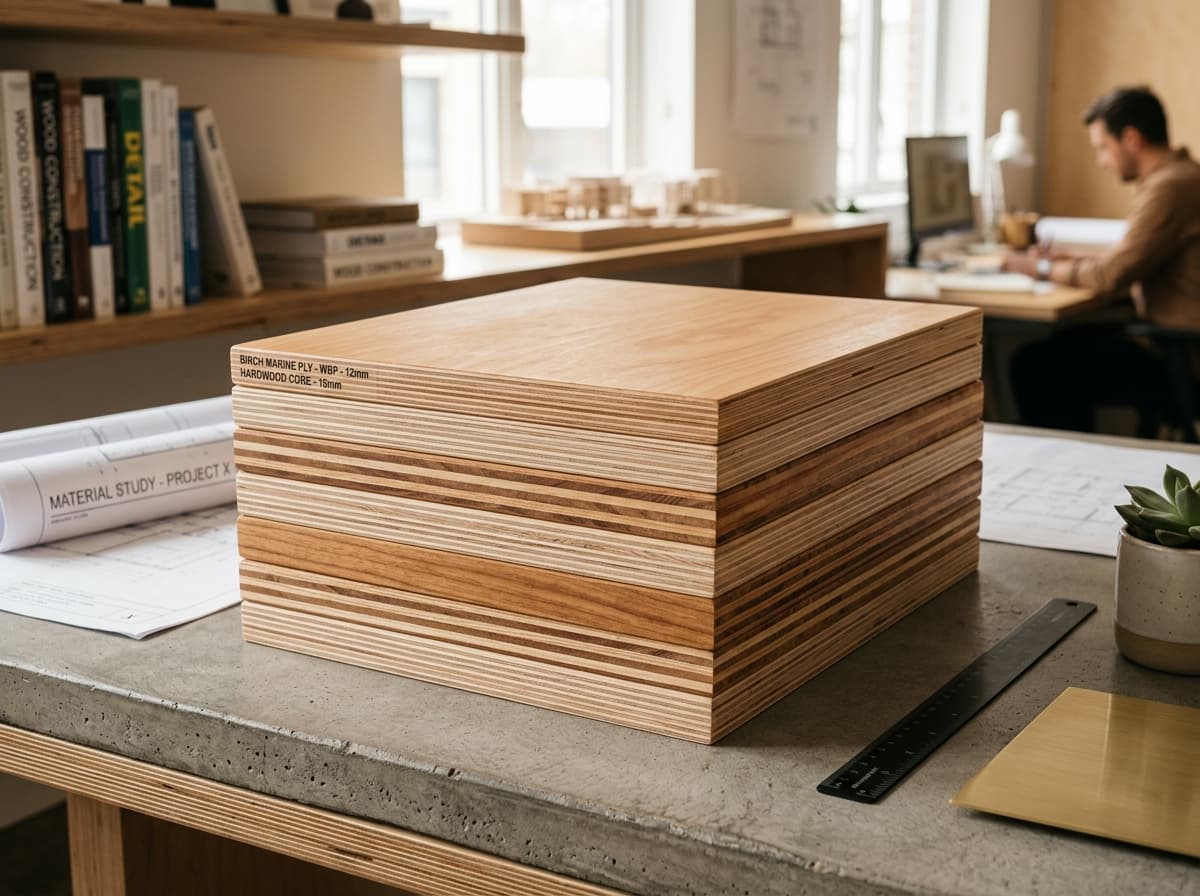
The essential distinction between commercial and waterproof plywood is the chemical resin used to bond timber veneers. Commercial MR (Moisture Resistant) plywood uses Urea Formaldehyde (UF) resin, which resists normal room humidity but breaks down under prolonged water exposure. Waterproof BWP (Boiling Water Proof) plywood uses Phenol Formaldehyde (PF) resin, which forms a permanent chemical bond immune to water degradation.
Application Comparison
Matching the right plywood grade to room usage prevents overspending while ensuring long-term performance:
Where Commercial Plywood Makes Sense
Commercial plywood is suitable for dry indoor applications where water exposure is virtually zero: bedroom wardrobe carcasses, living room wall panelling, study tables, ceiling framework, and shoe cabinets placed away from entrance rain.
Common Mistakes to Avoid
- ✕Assuming "Moisture Resistant" (MR) commercial plywood is waterproof.
- ✕Using premium BWP marine plywood for temporary internal partitions where MR plywood is sufficient.
Key Takeaways for Homeowners
- ✓Reserve BWP IS:710 plywood for kitchens, bathrooms, and wet areas.
- ✓Use IS:303 MR commercial plywood for bedroom wardrobes to optimize your project budget.
Need Guidance for Your Project in Hosur?
Have questions about choosing between commercial and waterproof plywood for your Hosur home? Speak with our team at Sri Krishna Plywoods & Hardwares on 9944057507.